

Source: Lilly Roadstones/Stone via Getty images.
Artificial intelligence-powered functionality continues to pop up across a variety of tech products. In particular, smartphone is a device category where it is virtually inescapable, especially for those who want a device from one of the top manufacturers. While device manufacturers continue to tout the AI capabilities of their newest smartphones, consumer interest in these features remains mixed at best.
This blog post presents the findings of a survey conducted by 451 Research from S&P Global Energy Horizons which was fielded at the beginning of the holiday shopping season, and asked US consumers about current smartphone ownership, customer satisfaction, and planned purchases.
Key takeaways from the survey
More consumers are willing to upgrade early for AI features. According to our survey, 42% of respondents say the integration of new AI capabilities would make them “much more” or “somewhat more likely” to purchase a new smartphone model sooner than they otherwise planned. This percentage is five points higher than in Q4 2024 and reflects an increasing level of interest in devices with AI functionality. However, they are not as willing to change device manufacturers to gain access to these AI features. Only 30% agree that they would make the switch if necessary.
Search, editing and translation are top AI features. While there is yet to be a “gamechanger” use case to spur mass interest in AI capabilities, there are several existing features that support current levels of interest in the technology.
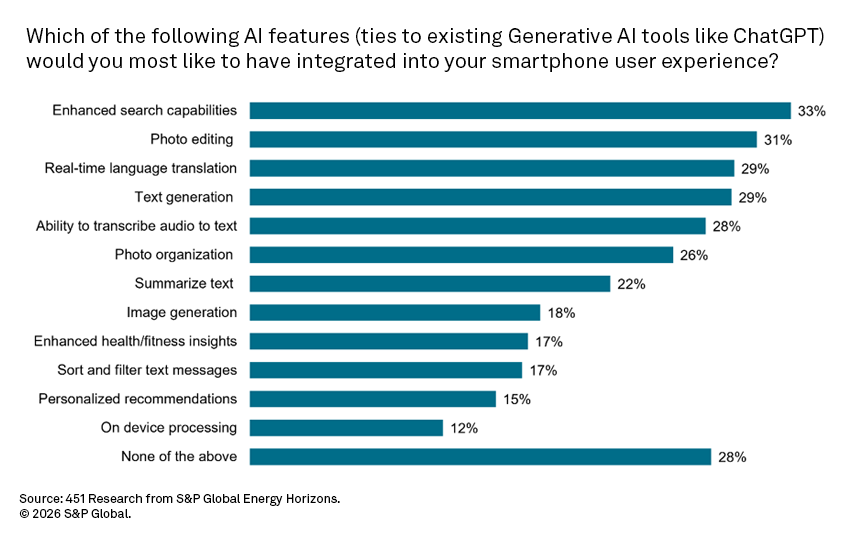
When we asked consumers which generative AI features they would most like to have integrated into their smartphone user experience (rather than as a separate app), enhanced search (33%), photo editing (31%), real-time language translation (29%), and text generation (29%) topped the list.
The key will be integrating these features in a way that feels natural to users without making the tasks they already perform feel more complicated or cumbersome. The quality of output is also paramount in how consumers respond to the technology once it’s in their hands: If they don’t perceive these features as “working right,” then they won’t use them.
Integration of AI features still leaves room for improvement. Among respondents who have smartphones from the dominant brands (i.e., Apple, Google, Samsung), 61% say they are aware of the AI features already integrated into their current devices. While this may seem a little low, it reinforces the idea that AI features in and of themselves are not the most important reasons for getting a new device.
On the positive side, 77% of this group agree that the AI features in their smartphones are easy to navigate/use, and 76% agree that these AI features meet the expectations created by advertisers. Furthermore, 58% agree that they use those features often. The main area of concern is that 43% say they would prefer not to have AI features integrated into their phone at all. This means that even some of those who use and are happy with their AI features say they would also prefer not to have them integrated into their phone — a clear indication of consumer ambivalence toward the technology.
But for now, there is still a large chunk of consumers who will use AI features if they’re available and convenient, but won’t go out of their way to seek them out. They could also just as easily live without AI features and continue to do stuff the “old fashioned” way.
Is privacy becoming a trade-off for new functionality? As with most new technologies, especially those with access to personal information, privacy concerns are usually top of mind. In the latest survey, privacy (55%) is still the greatest concern among respondents, yet it’s down 10 points compared with our previous survey (Q4 2024). Cost concerns (41%; down seven points) are also down compared with the previous survey, as are worries about complexity (23%; down four points). Concerns about the intrusiveness of AI debuts in our survey at 38%, while skepticism about the benefits of AI (35%; down one point) holds steady year over year.
Smartphone apps generally — and specifically, newer AI-powered features — are prime examples of the constant tug of war that consumers experience between privacy and functionality. As modern tech users, most consumers have already traded some of their privacy away for more personalized experiences. But are consumers actually becoming more comfortable, or are they just making more privacy sacrifices to keep up with the latest tech?

The Smart Home Era is Here
Want insights on consumer technology trends delivered to your inbox? Join the 451 Alliance.
