
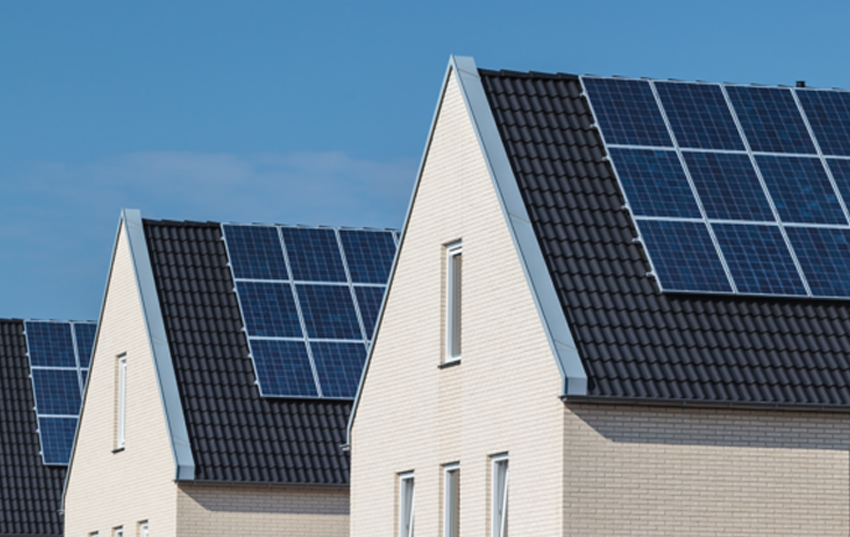
Source: DutchScenery/iStock via Getty images.
451 Research by S&P Global conducts a series of surveys which focuses on the experiences of retired and near-retired respondents to better understand the attitudes, habits and spending patterns of this cohort when it comes to technology, leisure, finance, and related products and services. A recent iteration of the survey focuses on living arrangements, finances, adoption of connected home products and use of home energy solutions.
The Take
Despite often being portrayed as technology Luddites, retirees appear more than willing to adopt home technology, including smart cameras, thermostats and speakers. Retirees also express interest in technologies that help reduce energy costs and that can provide reliable power in the event of issues with the electric grid. That said, many retirees still have strong misgivings about connected devices, with a majority expressing concern over the privacy and security of the personal data these devices collect.
Summary of findings
Retirees maintain stable home ownership rates. Overall, retirees continue to experience some of the most stable living arrangements. When asked about their primary residence, 82% of retirees say they live in a single-family home. When asked whether they own or rent, 93% say they own their primary residence, and 78% of owners say they do not have a mortgage. The latter figure has increased from a year ago, signaling that retirees continue to pay off their mortgages the longer they own their homes. Among the 22% of retiree homeowners with mortgages, fixed-rate mortgages (19%) are by far the most popular type. Another indicator of real estate stability among this cohort is that only 3% purchased a new home in the last 12 months.
Smart home device usage is increasing. Among retirees who own at least one smart home device, the survey shows increased usage across almost all product types. Smart cameras (42%; up 6 percentage points) remain the top choice, followed by smart thermostats (31%; up 2 points), smart speakers (28%; up 3 points), electric plugs (21%; up 6 points) and lighting (20%; up 3 points). However, most of these households still have four or fewer devices, indicating many first-time device buyers entering the market, more so than existing smart households adding devices.
Privacy and security are pervasive concerns. Among those without smart home devices, 46% say they are simply not interested — down 13 points from the previous survey. The next-biggest reasons for not purchasing smart home devices are rising concerns about security (44%; up 8 points) and privacy (43%; up 11 points).
More broadly, four out of five retirees (81%) say they are very or somewhat concerned about the privacy and security of personal data collected by their connected products. However, in an increasingly connected world, we cannot assume that these concerns will translate to slower adoption.
There has long been a tug-of-war between consumers and tech companies over access to personal data. But at the end of the day, most people — even traditionally tech-cautious retirees — will likely accept the inherent risk to participate in the modern world.
Retirees show strong interest in home energy solutions. Retirees are most interested in purchasing energy-optimizing smart home devices such as thermostats and lighting, with 45% saying they are likely to do so in the next three years. While not as high, there is also solid interest in purchasing home batteries (22%), electric vehicles (21%) and solar panels (16%) in that time frame.
The primary reason given for investing in these technologies is to reduce energy costs (41%). To a lesser degree, respondents also cite the desire to maintain reliable power if the grid fails (17%), increase energy independence (12%) and generate environmental benefits (12%). The main reasons for not buying these home energy technologies are the perception that the cost is too high (28%) and, to a lesser degree, a lack of priority placed on climate change (17%).
Power outages are rare. The stability of utility-operated electric grids is a major factor in retirees’ relative propensity to explore alternative home power options. Just over one-quarter of respondents (29%) say they experienced a power outage in the previous 90 days. Furthermore, just 7% say power outages occur more frequently now than a year ago, while 16% say they happen less frequently. Utility companies remain a relatively stable source of power, so the incentive for retirees to explore energy independence or even a backup power option is limited. Only 26% of retirees report owning a backup power generator.
Unreliable power grids would motivate retirees to seek alternative solutions. Three in five retirees (59%) say an increased frequency of power outages would motivate them to install an alternative power solution. In fact, avoiding a prolonged power outage is even more of a motivating factor than rising energy prices: Just 21% say recent increases in gas and energy prices would motivate them to install alternative power solutions. Many retirees likely view rising gas prices as a transitory inconvenience. But an unreliable power grid is a different experience, and one that retirees are less likely to tolerate for long. Furthermore, given their higher homeownership rates and, in many cases, greater access to financial resources, retirees are often better positioned to afford the purchase of expensive power solutions compared to their younger counterparts.
The Smart Home Era is Here
Want insights on consumer technology trends delivered to your inbox? Join the 451 Alliance.
