

Source: Kmatta/Moment via Getty images.
Supply chain digital transformation is entering a new phase. What was once a collection of pilot programs evolved into large-scale initiatives that increasingly shaped organizations’ global logistics strategy. A study conducted by 451 Research from S&P Global Energy Horizons shows that artificial intelligence (AI) has become the most influential force driving this shift, while budgets hold steady and sustainability accelerates as a core priority.
Shifting drivers and persistent hurdles
A survey conducted by 451 Research from S&P Global Energy Horizons highlights how each supply chain segment prioritizes transformation based on its operational reality:
- Shippers focus on elevating product and service quality for end customers, with 34% citing it as their top driver.
- Logistics service providers emphasize service consistency (28%) and automation (19%) to scale across increasingly complex networks.
- Asset-based carriers are motivated not only by improved service and automation but also by new revenue opportunities (13%) and cost savings (12%), particularly through fuel and maintenance optimization.
Challenges also vary by segment. Shippers are most concerned with data security and privacy (19%), while LSPs struggle equally with integration hurdles (19%) and technical skills shortages (19%). Carriers face the steepest integration challenges with 24% of survey respondents indicating legacy platform complexity as their most significant barrier.
For IT decision makers, these insights underscore the importance of flexible, API-driven integration layers, targeted skills development and vendor partnerships to accelerate transformation while minimizing risk.
Budgets stabilize but expectations diverge
Digital transformation funding remains resilient. Average budgets for 2025 total $9.3 million, consistent with 2024 levels, and organizations expect 17% overall growth in 2026.
Regional strategies stand apart:
- North America anticipates a 15% increase and leads in performance expectations, targeting 36% ROI.
- Europe maintains a more cautious posture driven by regulatory pressure and market uncertainty, projecting 27% ROI.
- Asia shows the strongest momentum with an expected 23% budget increase, driven by infrastructure expansion and rapid technology adoption.
These variations emphasize the importance of region-specific planning—balancing ROI requirements in North America, regulatory constraints in Europe and rapid scaling strategies in Asia.
What organizations are tracking
According to a survey conducted by 451 Research from S&P Global Energy Horizons, organizations monitor a broad set of asset classes to optimize operations including:
- Powered fleet vehicles (77%)
- High-value equipment such as forklifts and cranes (74%)
- Non‑powered mobile assets including trailers and containers (67%)
- Fixed infrastructure assets such as storage racks and tanks (62%)
Data collection strategies reflect each segment’s priorities. Shippers emphasize forecasting and customer behavior data, LSPs prioritize safety and transactional data, and carriers focus heavily on fuel, maintenance and driver performance metrics.
AI leads the technology landscape
For the second year in a row, AI is the most impactful technology shaping supply chain innovation. Forty-one percent of organizations surveyed rank AI as the top driver of transformation, surpassing cybersecurity, cloud platforms and process automation.
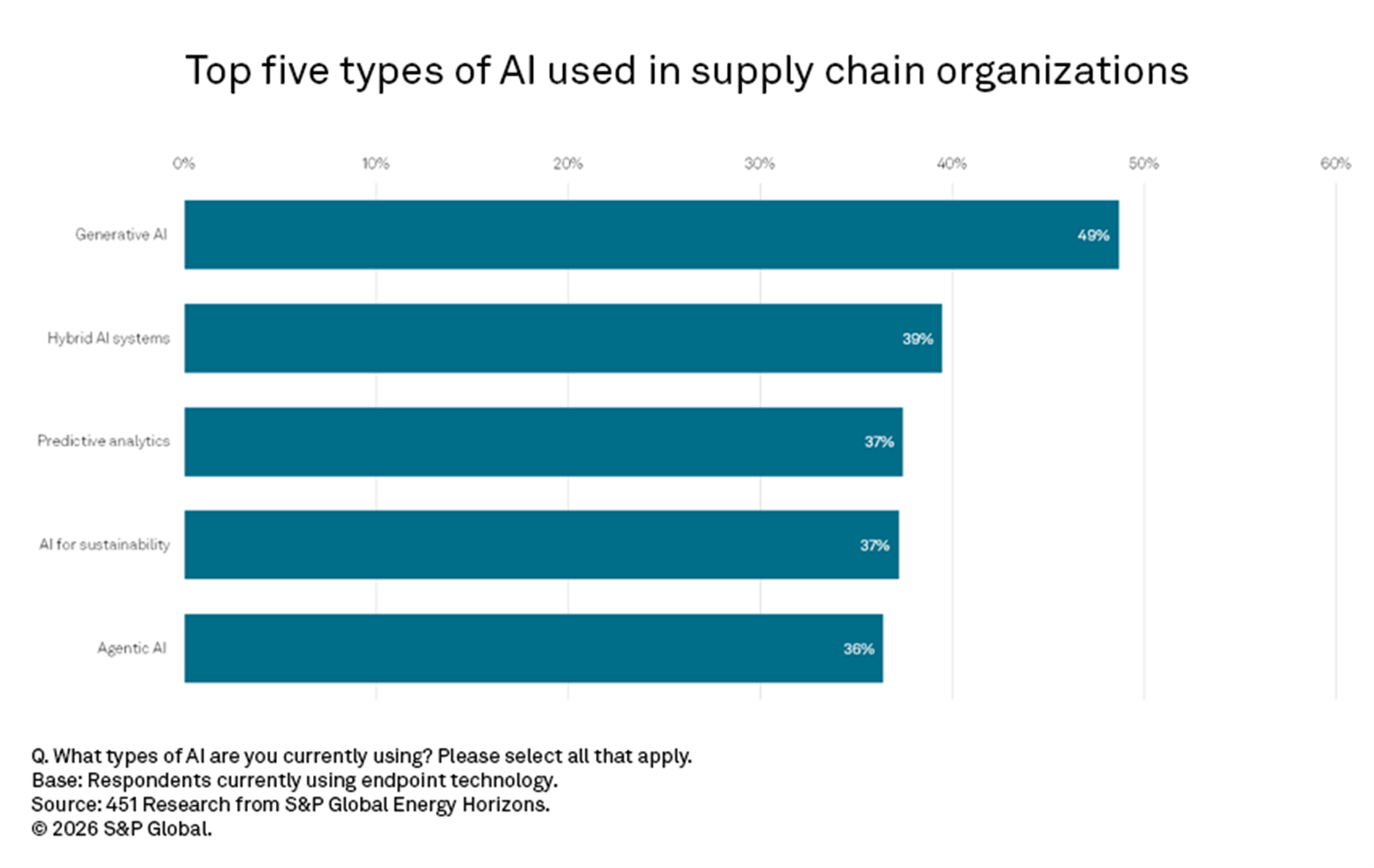
Generative AI is seeing particularly strong adoption, with 49% using it for hyper‑personalization, scenario simulation and advanced decision support. Hybrid AI systems (40%) support distributed operations, while predictive analytics (37%) continue to dominate use cases tied to risk reduction, forecasting and cost optimization.
AI’s influence extends to sustainability as well with 37% of organizations surveyed indicate that they use AI to optimize energy consumption and monitor emissions.
Emerging technologies gaining traction
Foundational technologies like cybersecurity, IoT connectivity and cloud have become standard. Over the next 12 months, organizations expect adoption to rise for Edge AI, autonomous vehicles and robotics, digital twins, blockchain for secure data exchange and immersive virtual reality (VR)/actual reality (AR) capabilities.
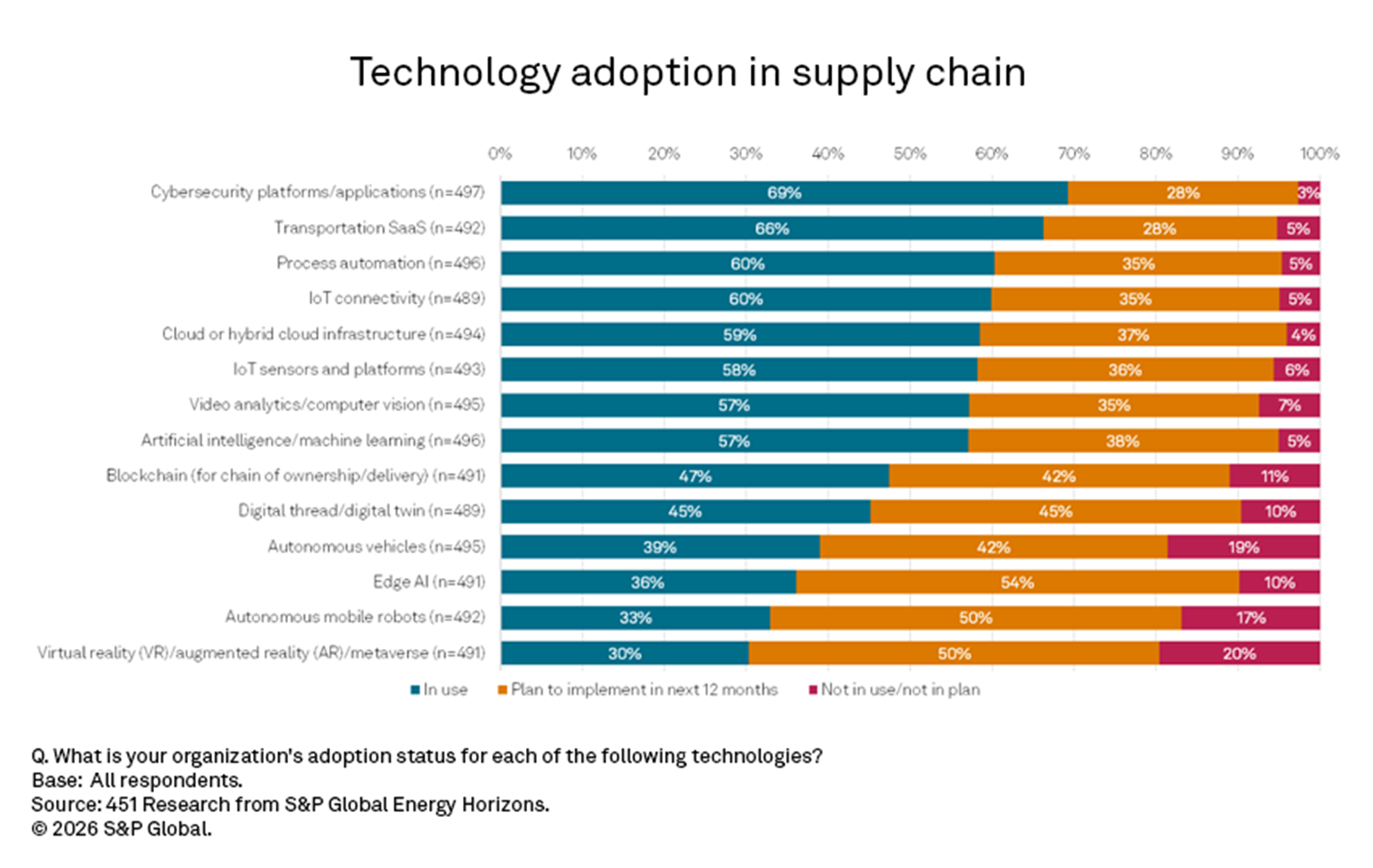
These advancements support more resilient and adaptive supply chain ecosystems, enhancing real‑time decision‑making and operational agility.
Sustainability becomes a strategic imperative
Sustainability is now a defining pillar of supply chain modernization. Top priorities include:
- Improving energy efficiency across fleets and facilities
- Increasing transparency and traceability
- Reducing packaging, fuel usage and operational waste
- Meeting ESG reporting requirements
- Supporting circular economic practices
To achieve these objectives, organizations are deploying route optimization (49%), real‑time tracking (45%) and electric vehicle fleets (43%). Shippers are also exploring renewable energy integration.
High costs are a persistent challenge and legacy integration barriers and data complexity remain obstacles. However, investment is accelerating even as regulatory and customer expectations intensify.

Can generative AI modernize legacy code bases?
Do you have your finger on the pulse of tech trends? Join the 451 Alliance for exclusive research content on industry-wide IT advancements. Do I qualify?
